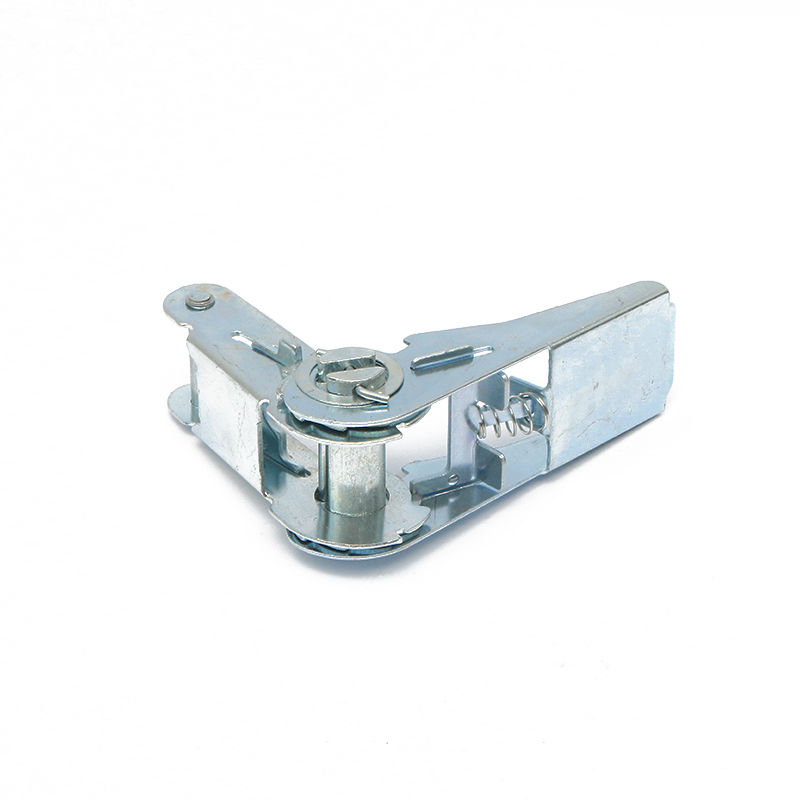
Home / News / Industry News / What Are the Advantages of Metal Ratchet Buckles Over Plastic Ones?
NEWS
What Are the Advantages of Metal Ratchet Buckles Over Plastic Ones?
The direct answer:Metal ratchet buckles outperform plastic ones in every critical load-bearing category. They offer 2 to 5 times higher working load limits, far greater resistance to UV degradation, temperature extremes, and impact, and a service life measured in years rather than months. For any application involving cargo securing, outdoor exposure, or repetitive heavy use, a metal ratchet buckle is the correct choice — not merely a premium one.
Strength and Load Capacity: Where the Difference Is Most Significant
The most quantifiable advantage of a metal ratchet buckle over a plastic equivalent is raw load capacity. The working load limit (WLL) and break strength of a buckle determine how safely it can secure a load under tension, vibration, and dynamic forces encountered during transport.
A standard plastic ratchet buckle typically carries a WLL of 100 to 250 kg and a break strength of 250 to 500 kg. By contrast, a steel or zinc alloy metal ratchet buckle in the same form factor routinely achieves WLL ratings of 500 to 2,500 kg and break strengths of 1,500 to 5,000 kg depending on material grade and design. For a heavy duty metal ratchet buckle for tie down straps, these figures are not theoretical — they are the minimum performance required by transport safety standards in most markets.
Working Load Limit Comparison: Metal vs Plastic Ratchet Buckles by Application Category (kg)
Light cargo (plastic)
250 kg
Light cargo (metal)
500 kg
Medium freight (metal)
800 kg
Heavy duty tie-down (metal)
1,500 kg
Industrial / flatbed (metal)
2,500+ kg
The structural reason for this disparity is straightforward: steel and zinc alloy components can sustain tensile and compressive forces without deforming, while polypropylene and nylon — even reinforced variants — are inherently more susceptible to creep under sustained load and brittle fracture at stress concentrations.
Durability Across Temperature and UV Exposure
Plastic polymers begin to lose mechanical properties at temperatures above 60–80°C and become brittle at temperatures below –10°C. In outdoor or transport applications, both extremes are routinely encountered — a flatbed truck in summer sun, a cold-weather construction site, or cargo shipped through multiple climate zones in a single journey.
A stainless steel ratchet buckle for outdoor use maintains its rated mechanical properties across a temperature range of approximately –60°C to +300°C without meaningful performance degradation. This makes metal the only viable material for applications involving heat exposure, cold climates, or any environment where temperature fluctuations are part of normal operating conditions.
UV and Weathering Resistance
Continuous UV exposure causes photo-oxidative degradation in most engineering plastics. Polypropylene ratchet buckles used outdoors without UV stabilizers can lose 30 to 50% of their impact strength within 12 to 18 months of continuous sun exposure. Even UV-stabilized grades eventually embrittle. Metal — whether zinc alloy, carbon steel with surface treatment, or stainless steel — does not experience UV-induced degradation. A properly finished metal buckle exposed to the same conditions remains mechanically unchanged.
Property
Plastic Ratchet Buckle
Metal Ratchet Buckle
Typical WLL
100–250 kg
500–2,500 kg
Operating Temperature Range
–10°C to +70°C
–60°C to +300°C
UV Resistance
Degrades in 12–18 months
No UV degradation
Impact Resistance
Cracks under sharp impact
Deforms without fracturing
Service Life (outdoor use)
1–3 years
5–15+ years
Chemical Resistance
Poor to moderate
Good (SS) / Moderate (zinc alloy)
Table 1: Performance comparison between plastic and metal ratchet buckles across key durability parameters
Material Options: Steel, Zinc Alloy, and Stainless Steel Explained
Not all metal ratchet buckles use the same material, and the distinction matters for application selection. The three dominant metal types each have specific strengths suited to different operating environments.
Carbon Steel with Surface Treatment
Carbon steel is the most widely used material for heavy duty metal ratchet buckles for tie down straps in commercial transport. Its tensile strength allows for the highest WLL ratings in the product category, and surface treatments — electrogalvanizing, hot-dip galvanizing, or powder coating — provide adequate corrosion resistance for most inland transport and storage applications. The trade-off is that surface coating integrity must be maintained; scratched or chipped coatings in marine or highly corrosive environments will allow rust to develop.
Zinc Alloy (Zamak)
Zinc alloy buckles offer a good balance of corrosion resistance, moderate load capacity, and weight reduction compared to steel. They are commonly used in mid-range cargo control applications, luggage systems, and equipment harnesses where the full WLL of steel is unnecessary but plastic would be inadequate. Zinc alloy is also easier to cast into complex geometries, enabling more ergonomic handle and pawl designs.
Stainless Steel (304 and 316 Grade)
A stainless steel ratchet buckle for outdoor use in marine, coastal, or chemically aggressive environments is the appropriate choice when corrosion resistance must not be compromised. Grade 316 stainless — which contains molybdenum — provides significantly better chloride resistance than 304 and is the standard specification for salt-water exposed applications. The trade-off is higher material cost and slightly lower hardness, but for applications such as boat deck cargo systems, waterfront equipment, or permanent outdoor installations, stainless is the correct material choice.
For applications combining high load capacity with corrosion resistance — such as coastal flatbed trucking or marine freight — a hot-dip galvanized carbon steel buckle provides the best balance of mechanical performance and corrosion protection at a lower weight penalty than stainless steel.
Heavy Duty Metal Ratchet Buckle for Tie Down Straps: Matching Buckle to Strap
A ratchet buckle is only as effective as its compatibility with the strap system it connects. Mismatched buckle-to-strap combinations are one of the most common sources of cargo securing failure in practice. Three parameters must align: strap width, strap breaking strength, and buckle WLL.
Strap width compatibility: Metal ratchet buckles are manufactured in standard slot widths — most commonly 25mm (1 inch), 35mm (1.5 inch), 50mm (2 inch), and 75mm (3 inch). The buckle slot must match the strap width precisely to ensure the webbing lies flat and engages the pawl mechanism correctly.
WLL matching: The buckle's WLL should be equal to or greater than the strap's WLL. A high-tensile polyester strap rated at 2,500 kg WLL paired with a buckle rated at only 800 kg creates a system limited by the weaker component — the buckle — at a point that may not be visually obvious during pre-use inspection.
Thread direction and take-up length: The mandrel (axle bar) diameter of the buckle determines how tightly the strap winds per ratchet cycle. Wider mandrels provide faster take-up but reduce fine tension adjustment. For long tie-down straps on oversized loads, a narrower mandrel and larger handle leverage ratio gives more precise tensioning control.
Strap Width
Typical Strap WLL
Recommended Buckle WLL
Common Application
25mm (1")
250–500 kg
500 kg min.
Motorcycles, light equipment
35mm (1.5")
800–1,000 kg
1,000 kg min.
ATVs, pallets, furniture
50mm (2")
1,500–2,500 kg
2,500 kg min.
Vehicles, heavy machinery
75mm (3")
3,000–5,000 kg
5,000 kg min.
Flatbed freight, construction loads
Table 2: Strap width to buckle WLL matching guide for metal ratchet buckle tie down systems
Metal Ratchet Buckle Replacement Parts for Straps: When and What to Replace
One underappreciated advantage of metal ratchet buckles over plastic ones is repairability. When a plastic buckle fails or cracks, the entire assembly must be discarded. A metal ratchet buckle system can often be partially repaired by replacing individual metal ratchet buckle replacement parts for straps, extending the useful life of the strap assembly significantly.
Components Most Commonly Replaced
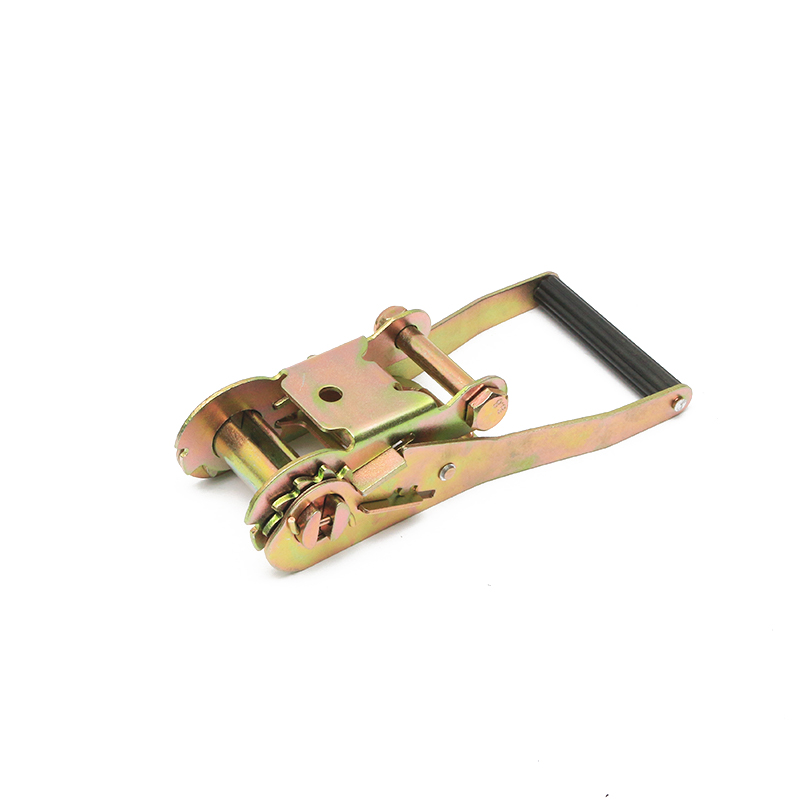
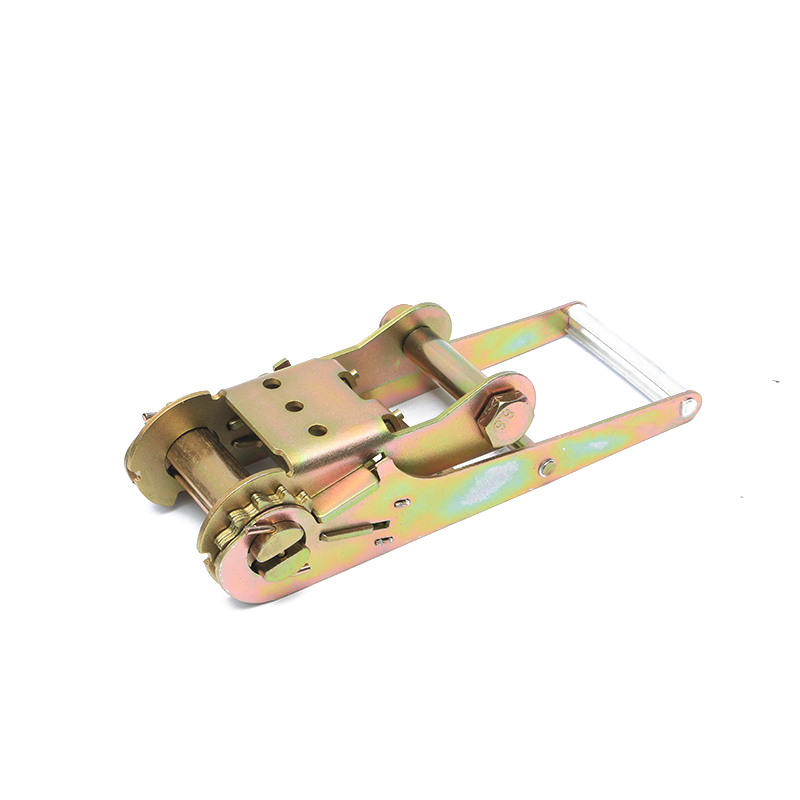
Mandrel (axle bar): The rotating bar that winds the strap. Can develop wear grooves over time under high-tension repeated use. A worn mandrel should be replaced before it begins to damage webbing fibers.
Pawl and spring assembly: The ratcheting mechanism that locks strap tension. If the pawl no longer engages cleanly or the return spring weakens, the buckle may slip under load — a safety-critical failure that requires immediate attention.
Handle: The long lever arm used to apply tension. Bent or deformed handles reduce mechanical advantage and should be replaced rather than straightened, as straightening can introduce stress concentrations.
Frame / body: The outer frame can be replaced if corrosion or mechanical damage is localized to the housing while the internal mechanism remains serviceable.
When sourcing replacement parts, always match the original buckle's strap width and WLL specification. Using undersized replacement components in a high-WLL buckle creates an unsafe assembly whose reduced capacity is not visible externally.
Inspection, Maintenance, and Safe Use of Metal Ratchet Buckles
Metal ratchet buckles do not require complex maintenance, but a consistent inspection routine is essential — particularly for buckles used in commercial transport, where cargo security directly affects road safety.
Pre-Use Inspection Checklist
Check the pawl engagement — it should click firmly into each ratchet tooth with no skipping or slippage.
Inspect the frame and handle for cracks, bends, or corrosion that has penetrated below the surface coating.
Verify the mandrel rotates freely and shows no significant wear grooves where the strap contacts it.
Confirm the release lever operates smoothly and returns to the locked position without assistance.
Check that the strap threads correctly through the slot with no twists or folds that could cause uneven loading.
Corrosion Management
For zinc alloy and carbon steel buckles used outdoors, a light application of penetrating oil to the pawl mechanism after washing or prolonged wet exposure prevents internal corrosion that can cause the ratchet mechanism to seize. For stainless steel ratchet buckles for outdoor use in marine environments, rinse with fresh water after salt exposure and dry before storage to prevent chloride accumulation in crevices.
About Ningbo Wuxiang Qunyi Metal Products Factory
Manufacturer Profile
Ningbo Wuxiang Qunyi Metal Products Factory was established in 2013 and is located in Ningbo, Zhejiang Province — formerly operating as Ningbo Yinzhou Wuxiang Mingxu Hardware Factory. The facility covers an area of 4,000 square meters with 4 professional production lines and a team of 88 qualified employees, supported by more than 13 years of professional manufacturing experience.
As a professional China OEM metal ratchet buckle manufacturer and ODM factory, the company specializes in ratchet buckles, hooks, ratchet ties, and a full range of cargo control system products — including webbing slings, cargo nets, and bungee cords. Products are widely used in transportation, movement, shipment, and storage of goods across domestic and international markets.
The company accepts fully customized orders including different tensile and breaking strength specifications, lengths, and colors to suit specific application requirements. Products are distributed across all provinces and cities in China and through numerous overseas trading partners, built on a business principle of mutual benefit, professional service, and consistent product quality.
2013
Year Established
4,000 m²
Factory Area
4
Production Lines
13+ Years
Manufacturing Experience
Frequently Asked Questions
Working load limits for metal ratchet buckles vary by size and material. A 25mm zinc alloy buckle typically carries a WLL of around 500 kg, while a 50mm carbon steel buckle for tie down straps commonly achieves 2,500 kg WLL with a break strength of 5,000 kg or more. Always verify the specific WLL rating marked on the buckle body and confirm it meets or exceeds the strap's rated capacity.
Grade 316 stainless steel is the recommended material for marine and coastal applications. Its molybdenum content provides substantially better resistance to chloride-induced corrosion compared to 304 stainless or zinc alloy. A stainless steel ratchet buckle for outdoor use in salt-air or direct seawater exposure environments will maintain both its appearance and mechanical integrity significantly longer than any coated carbon steel or zinc alloy alternative.
In most metal ratchet buckle designs, the pawl and spring assembly are replaceable as individual metal ratchet buckle replacement parts for straps. This is one of the key advantages of metal over plastic construction. Ensure you source a spring rated to the same WLL as the original buckle — using an undersized spring in a heavy-duty buckle can result in ratchet slippage under load, which is a safety-critical failure.
Apply a light coat of penetrating oil or dry lubricant to the mandrel, pawl pivot, and release mechanism before storage or before use in wet conditions. Avoid thick greases, which can attract grit and accelerate abrasive wear. For very cold climates, use a lubricant rated for low-temperature operation — standard mineral oils can become viscous and impede mechanism movement below approximately –20°C.
Yes — in fact, a heavy duty metal ratchet buckle for tie down straps is the industry standard for flatbed trailer cargo securement in most countries. Regulations such as the FMCSA cargo securement rules in the United States and EN 12195 in Europe specify minimum WLL requirements for tie-down systems based on cargo weight, and plastic buckles do not meet these thresholds for commercial freight. Steel buckles in the 50mm and 75mm strap width classes are the most commonly used in professional flatbed applications.
A well-maintained metal ratchet buckle used in regular commercial transport — loaded and unloaded daily — typically has a service life of 3 to 7 years before internal wear in the pawl and mandrel requires replacement of those components. The outer frame and handle often last significantly longer. Regular inspection and timely replacement of worn internal parts, rather than replacement of the entire assembly, is the most cost-effective maintenance strategy for fleets using multiple tie-down systems.

 EN
EN  中文简体
中文简体 Español